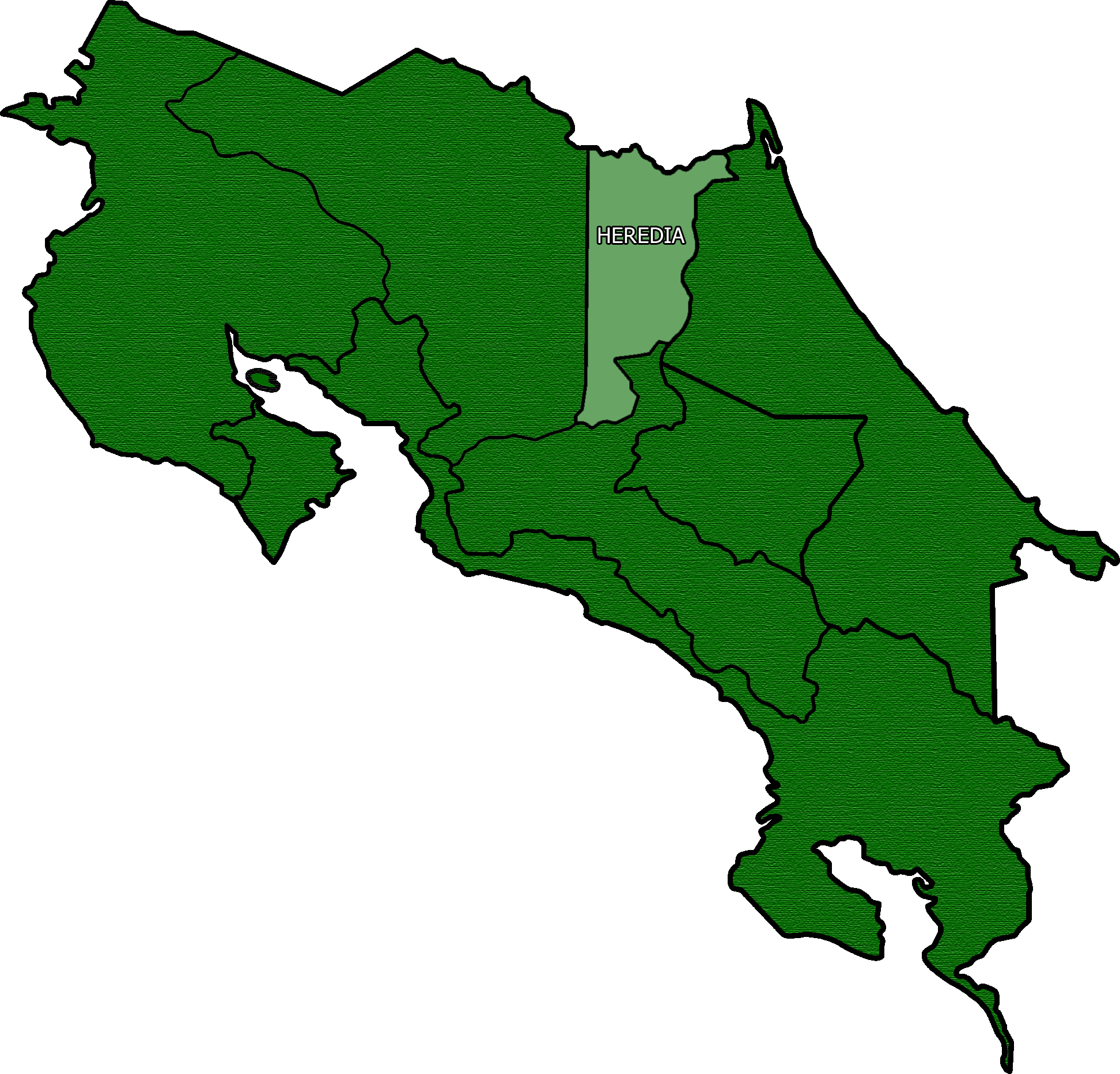
Heredia Province is one of those places travelers often pass through without realizing how much they just missed. It sits right in the Central Valley, close to San José and the international airport, but it has a personality of its own — cooler mountain towns, old colonial streets, coffee farms, cloud forest, and some surprisingly beautiful scenic drives. Heredia does not shout for attention like Arenal or Manuel Antonio. It just quietly sits there with good coffee, green hills, historic buildings, and the smug confidence of a place that knows it has been underrated for years.
The city of Heredia is often called the “City of Flowers,” and while that sounds like something cooked up by a tourism committee after too much coffee, it actually fits. The province has long been tied to agriculture, gardens, coffee, and the cooler climate of the Central Valley. For travelers, Heredia works well as a first or last stop in Costa Rica, especially if you want to avoid dropping straight into San José traffic and questioning your life choices before the vacation has properly started.
Points of Interest
The historic center of Heredia is a good place to start. Around the main park, you will find the Church of the Immaculate Conception, one of the city’s most important landmarks, along with El Fortín, the small red brick tower that has become a symbol of Heredia. This is not a massive colonial city like you might find elsewhere in Latin America, but it has enough history, local rhythm, and walkable charm to make it worth a look.
Barva is another important stop, especially for travelers who like older towns with character. It has traditional architecture, a relaxed local feel, and access to the mountains above Heredia. The Museo de Cultura Popular, located in Santa Lucía de Barva, is a good cultural stop for anyone who wants to understand more about everyday Costa Rican life, traditions, old homes, coffee culture, and the way families lived before everything came with Wi-Fi and a password nobody can remember.
For nature, Braulio Carrillo National Park is the big name here. The Barva Volcano Sector gives visitors access to cloud forest trails, cooler air, volcanic lagoons, and a very different side of Costa Rica than the beaches. This is not a flip-flops-and-smoothie kind of stop. It is cooler, wetter, greener, and better suited for travelers who like hiking, birds, mossy forest, and the feeling that nature is slowly trying to reclaim your jacket.
A Little History
Heredia’s roots go back to the early colonial period, when the area was known as Cubujuquí. Over time, the city grew into one of the important communities of the Central Valley, shaped by farming, coffee, religion, and trade. The old church, central park, and surrounding neighborhoods still give you a glimpse of that older Heredia, even if modern traffic and daily life have done their best to elbow their way into the scene.
Coffee played a major role in the province’s identity. The fertile volcanic soils, elevation, and Central Valley climate helped make Heredia one of Costa Rica’s traditional coffee-growing regions. You still see that today in areas like Barva, Santa Bárbara, San Rafael, and the hills above the city, where coffee farms and mountain views are part of the landscape. For visitors, a coffee tour in Heredia can be a much more relaxed alternative to some of the bigger, more commercial stops elsewhere.
Scenic Areas
Heredia’s scenery changes fast. Down in the city, you have parks, churches, universities, neighborhoods, bakeries, and the normal bustle of Costa Rican urban life. Drive uphill, and suddenly you are in cooler mountain air, with dairy farms, coffee fields, forested ridges, and views over the Central Valley. The areas around San Rafael, San José de la Montaña, Barva, and Santa Bárbara are especially good for scenic drives, lunch with a view, and that nice little Costa Rica moment where you realize you packed completely wrong and now need a sweater.
The Barva Volcano area is one of the most scenic parts of the province, but it does require planning. Roads can be steep, weather can change quickly, and the trails are better for people who are prepared for mud, clouds, and cooler temperatures. On a clear day, the views can be excellent; on a cloudy day, the forest still has its own charm. Either way, this is one of the better options near the Central Valley for travelers who want nature without committing to a long drive across the country.
Heredia also stretches north into Sarapiquí, which gives the province an entirely different flavor. This area is warmer, wetter, and more tropical, with rivers, rainforest, wildlife, rafting, chocolate tours, nature lodges, and excellent birding. It surprises people because they think of Heredia as city and coffee country, then suddenly the province turns into jungle. Costa Rica likes to do that. Keeps everyone humble.
Food Scene
Heredia’s food scene is practical, local, and better than many visitors expect. In the city and surrounding towns, you will find plenty of sodas serving casados, gallo pinto, soups, grilled meats, fresh juices, and the kind of lunches that make you wonder why airport food is legally allowed to exist. The central markets, bakeries, and small cafés are often the best places to get a feel for everyday Heredia.
Because Heredia sits close to San José, Escazú, and the airport corridor, you also get a good mix of options: traditional Costa Rican food, coffee shops, casual international restaurants, bakeries, breweries, and nicer dining in the hills. The mountain towns are especially good for relaxed lunches with views, local cheese, coffee, tortillas, soups, grilled dishes, and the occasional dessert that ruins your plan to “eat light.”
Heredia is not usually the main star of a Costa Rica itinerary, but it is a very useful province to understand. It can work as a soft landing after arrival, a final night before flying home, a coffee and culture stop, or a mountain escape close to the Central Valley. It gives you history, scenery, good food, and access to both cloud forest and rainforest without making the trip feel complicated. And in Costa Rica travel planning, “not complicated” is a beautiful thing.